
Why Some Live Streams Cost More — and What Really Drives the Difference
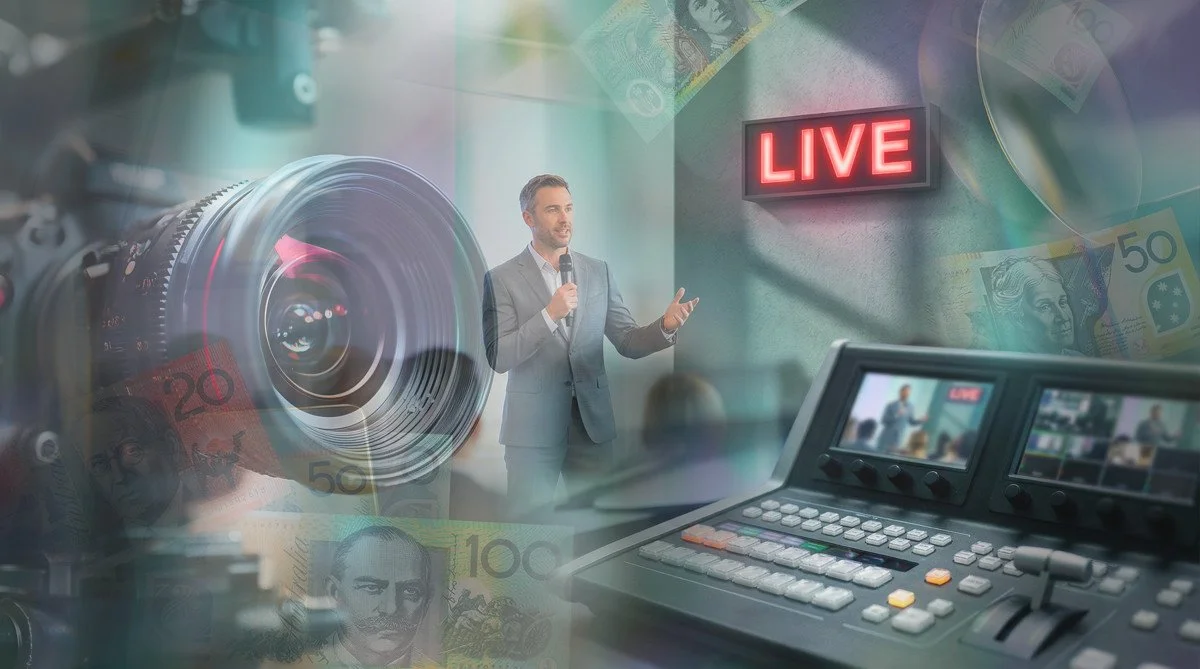
“In live production, cost is rarely just about gear or labour. It’s about planning, control, workflow, accountability and risk.”
If you've ever asked for a few livestreaming quotes, you've probably had the same reaction most buyers do: why is there such a big range in the cost?
One quote looks surprisingly cheap. One feels about where you expected. Another comes in much higher and is suddenly hard to justify. At that point, most people assume someone is overpriced, or someone is trying to undercut the market.
Sometimes that's true. But a lot of the time, the cheaper quote is simply missing the very things that make the event work properly. That's the part buyers need to understand.
In live production, a quote is not just a number. It's a description of how the event will be delivered, what standard it will reach, how much support you'll get, and how much risk is being carried by the provider instead of quietly landing back on your team.
That is why some livestreams cost more. And it is also why the cheapest quote can cost you more later.
The short version
Some livestreams cost more because they include more of what actually makes the event work: stronger planning, better production control, more presenter support, cleaner workflow, and better handling of risk.
Cheaper quotes often look attractive because they leave things out. Sometimes those things are optional. Sometimes they are exactly the things that stop the event from feeling improvised.
Why quotes can vary so much
Two providers can sound like they are quoting the same job when they are not.
On paper, both may include a livestream, a camera, an operator, a recording and some graphics. But one may be quoting basic capture and delivery, while the other is quoting a properly managed production. That difference matters more than most buyers realise.
A lot of the spread between quotes comes down to what is actually included, how much experience sits behind the workflow, how much happens before the event, how much control exists during it, and how much risk is being absorbed by the provider rather than pushed back onto the client. That is usually where the real cost difference lives.
The invisible work that cheap quotes leave out
This is one of the biggest traps. Buyers can see cameras. They can see operators. They can see a stream going live. What they often can't see is the work around it: the planning, checking, coordination, preparation and production management that make the event feel smooth rather than improvised.
That work is not glamorous, but it is often the difference between a stream that technically happens and an event that actually feels well run. Those are not the same thing. And in more than 20 years of producing live events, this is one of the most common reasons a cheap quote turns out not to be cheap at all.
When the cheapest quote gets more expensive later
This is where the frustration usually starts. A low quote comes in and looks great. Then the real event details start getting discussed, and suddenly there are added costs for things like rehearsal support, graphics, remote presenters, longer run time or post-event edits.
At that point, the original number starts to unravel. Sometimes those additions are fair. Sometimes they should have been included from the start. Either way, the buyer ends up anchored to a number that was never really the whole story.
A better quote is not always the lowest one. Very often, it is the one that is honest upfront.
What you are really paying for
When a livestream quote is higher, it is usually because you are paying for a better-run event. Here is where that cost actually goes.
Better pre-production. A lot of event-day problems are planning problems in disguise. Weak pre-production usually shows up later as confusion, rushed decisions, missing assets, awkward transitions or unnecessary stress. Good pre-production reduces all of that. It is not flashy, but it is one of the clearest differences between a thin quote and a serious one.
Better production control. Some events only need basic capture. Others need actual production — somebody actively managing the pace, transitions, speakers, slides and overall experience so the event feels coherent from start to finish. The more visible or important the event is, the more this matters.
Better presenter support. Not every speaker is naturally good on camera. Some need help before the event so they look calm, clear and credible once it starts. That support is easy to leave out of a cheap quote, but it is often one of the things that makes the event feel polished.
Better risk handling. This is the part clients often don't ask about directly, but it is what they are often buying underneath the surface. They are buying relief from all the things that can go wrong in live production: a presenter not connecting properly, a late run sheet change, audio issues, timing slipping out, or a venue setup being messier than expected. Some providers quote as if none of that will happen. Experienced ones know live events always contain friction somewhere and price the job accordingly.
A smarter delivery model. A traditional on-site-heavy setup can mean more crew, more travel, more setup time and more overhead than the event actually needs. A remote-first production model — sometimes called REMI (Remote Integration Model) — can reduce a lot of that without reducing the production standard. That does not mean cheap. It means more efficient. And there is a big difference between those two words.
Why cheap can cost more later
There are usually three ways this shows up.
The first is that the event standard drops. The stream may technically happen, but it can still feel underdone — rough around the edges, less polished than it should be, and not quite at the standard the event really deserved.
The second is that the quote grows once the job starts. The low headline number turns into a more realistic one once the missing layers get added back in. By then, the process already feels messy and trust starts slipping.
The third is that the internal team ends up carrying the gap. This happens all the time. The provider is cheaper because they are assuming the client will handle more of the coordination, preparation and last-minute problem solving themselves. That might be fine for a simple low-risk session. It is usually a bad trade for a more visible event where your internal team already has enough on its plate.
How to compare livestream quotes properly
If you are reviewing quotes side by side, these are the questions worth asking.
What is actually included — and do the same words mean the same thing across each quote? How much planning, checking and preparation happens before the event? Is there one accountable production lead on the day, or are you stitching pieces together yourself? What is handled on site versus remotely, and how does that affect cost and workflow? Is rehearsal support included? Are graphics, recording and playback part of the package? How are remote presenters handled? And critically — what happens if the event changes on the day? The answer to that last question tells you a lot about how mature the provider really is.
When it is worth paying more
Not every event needs a premium setup. If it is a simple internal session with low visibility and low risk, a lighter-touch model may be perfectly fine.
But spending more is often justified when the event is high-visibility, executive-led, audience-facing, difficult to repeat, or simply important enough that rough edges will be noticed. That is where "good enough" starts getting expensive.
A good provider should also be able to tell you when the setup can be simpler, where the budget genuinely matters, and where you can save money without creating unnecessary risk. In more than 20 years of doing this work, that is usually a much better sign than someone automatically pushing the biggest possible setup. The goal is not to sell the largest production. The goal is to match the production model to the event.
Final thought
If one livestream quote is much cheaper than the others, do not only ask: why is the expensive one so high?
Also ask: what has the cheaper one left out?
That is usually the more useful question. Because in live production, cost is rarely just about gear or labour. It is about planning, control, workflow, accountability and risk.
That is why some livestreams cost more. And that is why the cheapest quote can cost you more later.
Written by Scott Gorman - Managing Director - MediahouseNext in this series: Hybrid Event Production: What Actually Needs to Be On Site and What Can Be Run Remotely
Need a realistic budget range for an upcoming event? Get in touch and we’ll give you a straight answer based on what your event actually needs.